Running with the Devil: The Rolling Stones
Part One: Play With Fire


This is the first post in a series I’ll be doing with my friend Stephen Thomas Erlewine, using material from a television and podcast project we’ve been developing with Sue Kolinsky and Greg Johnston about the history of rock and the occult, tentatively titled Running with the Devil.
While “rock and the occult” gives you a good sense of the project’s general direction, we will sometimes cover the shadow or dark side of pop music more broadly. Think of this as essentially Rock and Roll Unsolved Mysteries.
We’ll hopefully launch a podcast on these subjects in 2026, but in the meantime, we have more than enough material to provide entertaining entries here on Substack.
Tom Erlewine’s and my posts on this will be virtually identical and published on our separate Substacks at the same time. Tom is a legendary music critic, someone I read and looked up to long before I knew him, and if you’d like to learn more about music, I highly recommend subscribing to his Substack called So It Goes.

We hope you enjoy this initial series of posts on the subject of England’s newest hitmakers, The Rolling Stones, and how they came to their sympathies for the devil.
Part 1: Play With Fire
A few years ago, Bob Dylan compared himself to “Them British bad boys, the Rolling Stones,” buttressing a reputation that had already become legend by the time the band released their career-making smash “(I Can’t Get No) Satisfaction” in 1965.
“Satisfaction” arrived two years after the band’s first single, a cover of Chuck Berry’s “Come On” which was successful enough to attract the interest of the music press. To the willing ears at Melody Maker, Andrew Loog Oldham, the band’s manager, whispered the suggestion of a headline: “Would You Let Your Daughter Go With a Rolling Stone?”
By the time it reached print, it was changed and softened, becoming “Would You Let Your Daughter Marry a Rolling Stone.” The original phrasing suggested a loosening of social mores that the band would seize by the middle of the decade.
Oldham claimed, “They were all bad boys when I found them. I just brought out the worst in them.” Charlie Watts, the band’s dapper drummer, concurred: “Andrew just observed how we looked and how we lived. He just manipulated the way we were.” Keith Richards, the guitarist who’d become known as the group’s resident outlaw, went a bit further: “Andrew was a genius at getting messages through to the media without people knowing, before people really knew what the media was. He always made sure we were as violent and nasty as possible.”
It was the opposite tactic that Brian Epstein took with the Beatles, a group of working-class toughs polished into a pop group. Oldham took the resolutely middle-class Rolling Stones and made them renegades, adding a dash of danger—which was what was needed in the British blues scenes, which tended to be a bit too worshipful of their American inspirations.
There wasn’t a sense of remove with Oldham, not in the way there was with Brian Epstein and the Beatles. Epstein acted older, a businessman intent on introducing ruffians to respectable society. This was because Epstein was older. Epstein was born in 1934, four years older than the Beatles’ oldest member, Ringo Starr, while Oldham was born in 1944, making him younger than Keith Richards and three years younger than the Stones’ oldest member, Charlie Watts.
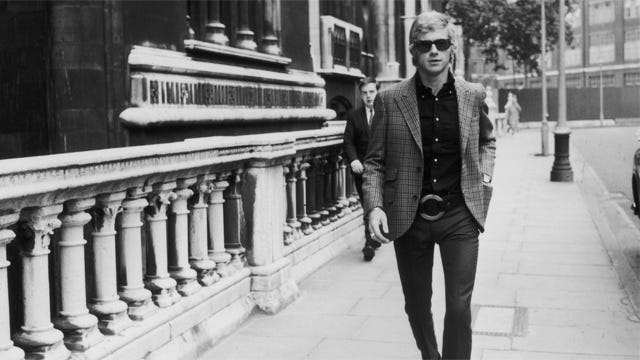
Andrew Loog Oldham was an impish schemer, seeking to upset polite society and turn a profit for his troublemaking. (Decades later, HBO tried to make a series about his exploits.) As a teenager, he had bleached his hair blond and adopted a German accent to antagonize British society, who were then only a few years past having successfully fought off the blond beasts of Nazism.
Oldham’s love of Hollywood movies (his German schtick he took from Brando in The Young Lions, and his gangster publicist persona from Tony Curtis’ cunning Sidney Falco from The Sweet Smell of Success) meant he could give the Stones a slick edge. His background in PR and the music business, having previously worked for both Phil Spector and Brian Epstein, meant he presented the Stones as media savvy.
A 1964 press release put out for the Stones says of the group: “Many top pop groups achieve their fame and stardom and then go out, quite deliberately, to encourage adults and parents to like them. This doesn’t appeal to the forthright Stones. They will not make any conscious effort to be liked by anybody at all—not even their present fans if it also meant changing their own way of life. The Stones have been Rebels With A Cause ... the cause of rhythm’n’blues music.”
It was from Andrew Loog Oldham that the Stones learned the valuable lesson that it pays to shock people.
Oldham also had the future in mind in a way the Stones did not. Keith said. “It had never crossed my mind to be a songwriter until Andrew came to me and Mick and said, ‘Look, how many good records are you going to keep on making if you can’t get new material? You can only cover as many songs as there are, and I think you’re capable of more.’ We had never thought of that. He locked us up in a room about the size of a kitchen and said, ‘You’ve got a day off, I want to hear a song when you come out.’
As the mid-sixties continued, the band’s original material became controversial. “Stupid Girl” and “Under My Thumb” were never going to be adopted by the nascent feminist movement any time soon, and “Let’s Spend the Night Together” would get a new name and sarcastic eye-rolls when Jagger sang the song on The Ed Sullivan Show. The working title for a 1966 album called Could You Walk On The Water? (which later became Aftermath) could have joined John Lennon’s remarks about Jesus and Christianity that year and gotten the band in hot water with Christians, but their record label refused to release it under that name.
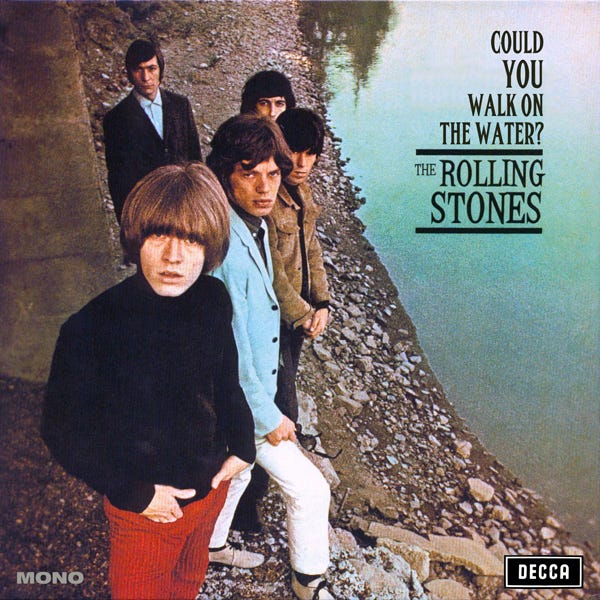
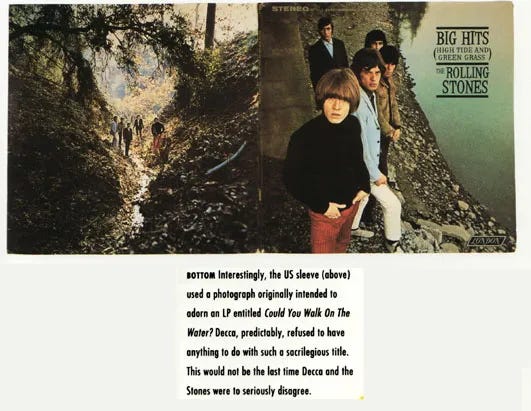
The original material also helped shape the band’s image as a threat to the status quo. It was Jagger’s sly satirical lyrics, along with the jagged punch of the Stones—a sound accentuated by the crosscultural explorations of Brian Jones, the band’s original lead guitarist and leader.
Jones later became the focal point of the first suggestions of Satanism within the Rolling Stones. There seemed something truly demonic within his half-lidded stare, a darkness brought out in “Paint It, Black.”
Brian Jones, however, wasn’t an appropriate conduit for ushering the darkness into the mainstream. Mick Jagger was.
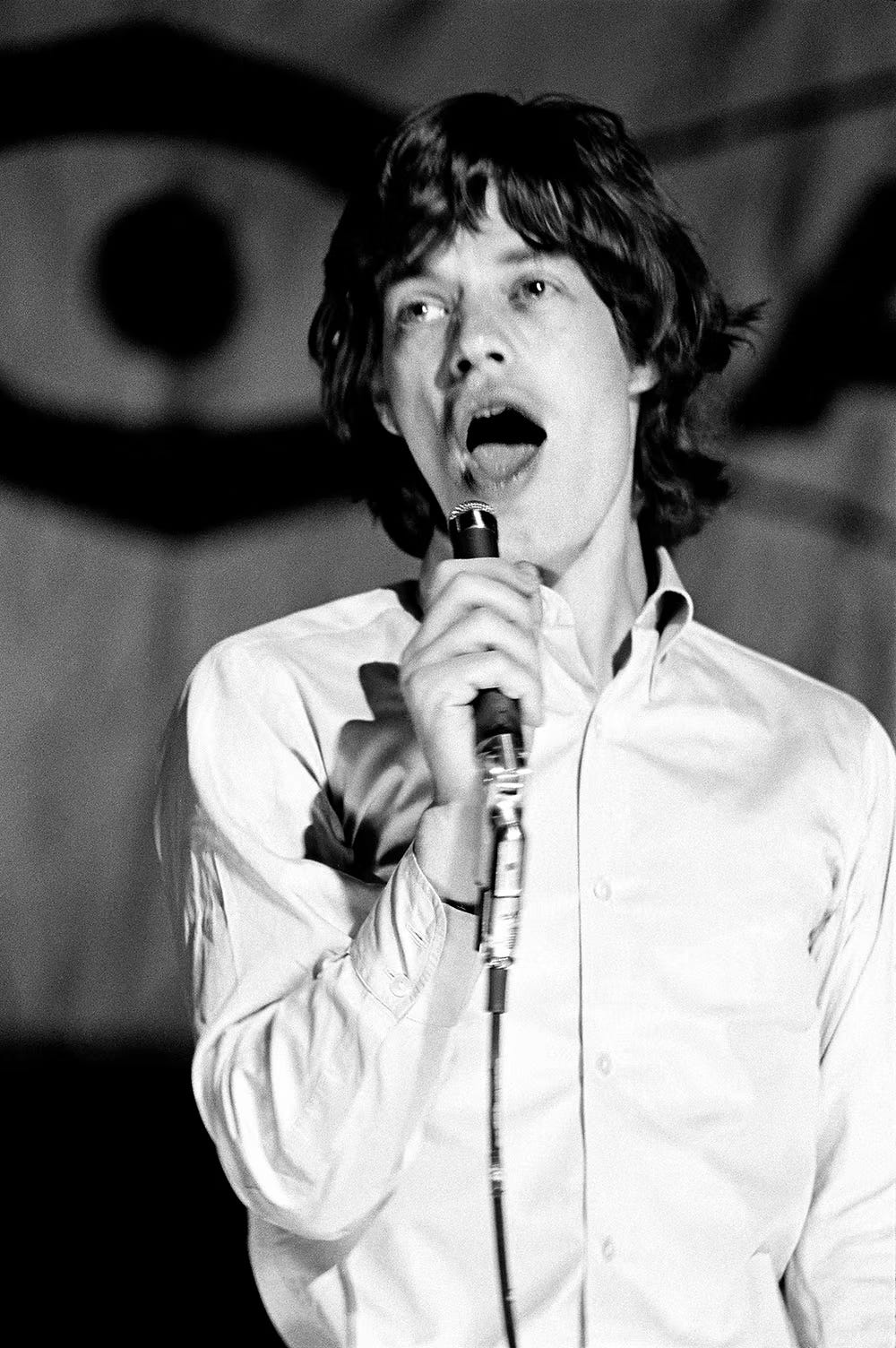
In September of 1965, with the Stones playing a Berlin amphitheater built for the 1936 Olympics at the Satanic majesties’ request of Nazi propagandist Joseph Goebbels, Oldham would advise Jagger to jokingly do the German goosestep march around the stage during “Satisfaction.” Mick would one-up the suggestion and add the Sieg Heil salute. A near riot soon followed, with 123 cars smashed outside and German teens losing their minds and destroying the theater.
The following year, Brian Jones would get into his own Nazi controversy when he showed up for a photo shoot for a German magazine wearing a Nazi SS uniform.
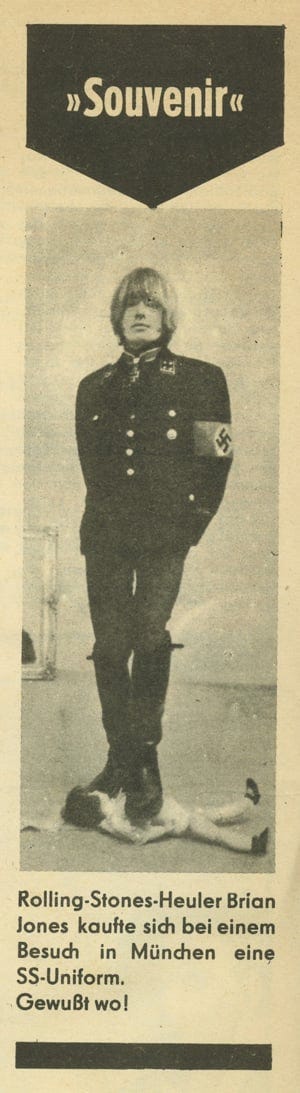
With the psychedelic era commencing and their 1967 album going under the name Their Satanic Majesties Request, along with their impresario Andrew Loog Oldham’s drug problem bringing on his exit from the Stones, the band now had the potential to go from mere showbiz bad boys to something authentically darker.
But what happened when the band danced too close to the flame?
By 1967, at the heights (or depths) of the Stones’ “Satanic-era” of 1967-1969, Mick Jagger had been approached by the late occultist Aleister Crowley’s anointed successor (Tom Driberg) to go into politics as a Labour MP, he was acting for Crowley’s godson (Donald Cammell) in the movie Performance, and arguably Crowley’s most-famous showbiz acolyte, Kenneth Anger, had initially convinced Jagger to play Lucifer in one of Anger’s underground films.
We will cover some of this and other aspects of the Rolling Stones’ pivotal 1967 in the next installment.
 | A guest post by
|
I can’t wait for more content by Conrad on this topic. If you feel the same way you should visit Tucker Carlson’s Oct 3rd, 2025 podcast in which Conrad exposes the depths of the occult in music, Hollywood and Artificial Intelligence. You will be blown away!!!!!
Wow 🤯
So much info in here that I had no clue about.
I had heard rumors about the Stones & many other rock bands supposedly playing around with Satanism but I always thought it was just rumors to look tough & sell more records…
Thanx so much Conrad for shining The Light into fascinating topics & exposing the truth❣️