How Tom Cruise Keeps Making the Same Thriller
40-60% of his movies since 1993 have been in a genre popularized by spy novelist John Buchan.

Movie stars and their teams often pick roles based on a proven formula for them. People are familiar with Will Smith's '90s criteria for choosing which blockbuster script to take on: it needed to have special effects galore, alien creatures, and a romance. Jack Nicholson would say he only chose scripts that had at least “Three good scenes and no bad ones.” Leonardo DiCaprio has followed the ‘70s Robert De Niro formula of never, ever playing a wife guy (after winning over a generation of young women with Titanic, DiCaprio focused almost exclusively on characters and films that would appeal to young men).
My own grandfather typically played tough guys and action heroes (people didn’t exactly watch Robert Conrad TV shows to see the man cry on camera or capture in a grimace that we had lost Vietnam).
Here are two successful formulas Tom Cruise used to become the biggest movie star in the world.
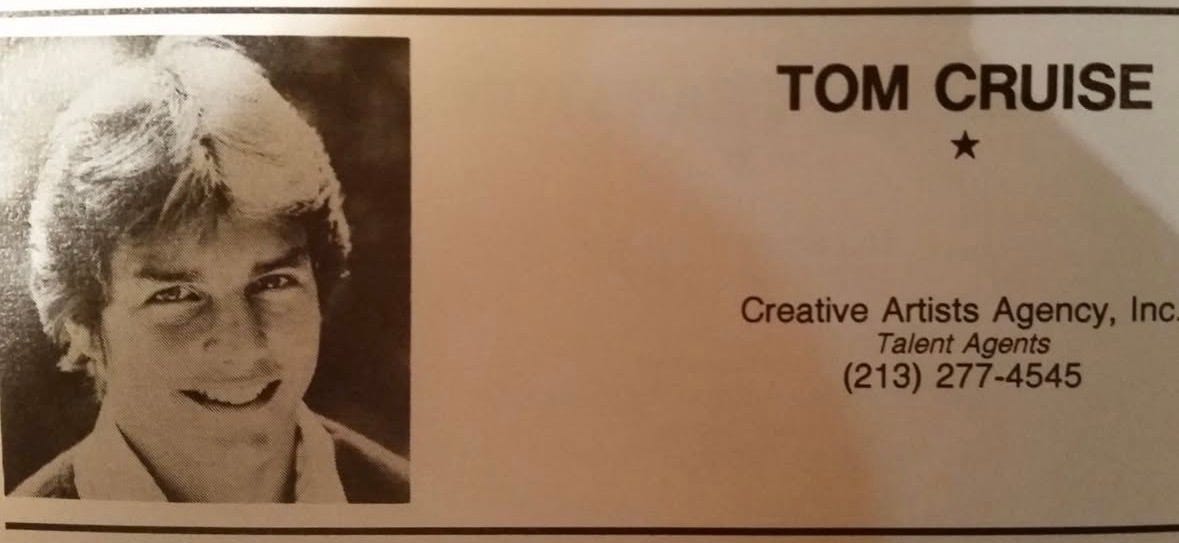
Earlier in his filmography (1983-1993), Cruise’s characters had a generic arc. The film would begin with Cruise already living the life of Riley (Risky Business, The Color of Money, Top Gun, Cocktail, Days of Thunder) before the golden boy ran into his first bit of adult trouble. (The Japanese writer Ryu Murakami has said that all stories follow the same plot of the protagonist falling into a hole, and either crawling out or dying.)

Then, beginning in the mid-90s, Cruise adopted a much more unique formula for his films.
Since 1993’s The Firm, Cruise has truly starred in only about 27 movies (I’m not counting Tropic Thunder or ensemble movies—audiences can become visibly upset when Tom Cruise is merely one actor in a large cast). Over half of these are a subgenre of the action-adventure thriller that historian and literary theorist Martin Green dubbed the Hunted Man tale.
Here is how Martin Green describes the protagonist in most Hunted Man stories. He’s your prototypical Tom Cruise character.
Sometimes he is, or has been, a detective or an attorney; sometimes he is strictly a private citizen. In any case, he is effectively alone when he stumbles across a clue, an inexplicable incident, which leads him to find other clues, and ultimately to unravel a puzzle, a plot, a conspiracy.
And at the heart of the conspiracy he finds a social monster, an organization, sometimes totally illegal, sometimes apparently respectable, that threatens the life of his city or his nation.
Following these clues, piecing together the scattered truth, he attracts the attention of the organization and himself becomes a hated man. From this point on, everyone he meets, even old friends, are likely to turn out to be agents of the conspiracy, corrupt and treacherous, either out of weakness or out of malevolence. Houses, streets, office blocks, familiar to him and of a type familiar to the reader, become sinister.
Tom Cruise has adopted this story structure for his own films. His character belongs to an organization, learns it’s actually corrupt or evil (or is now controlled by villains from within), and then the org begins hunting Tom Cruise because our boy knows too much.
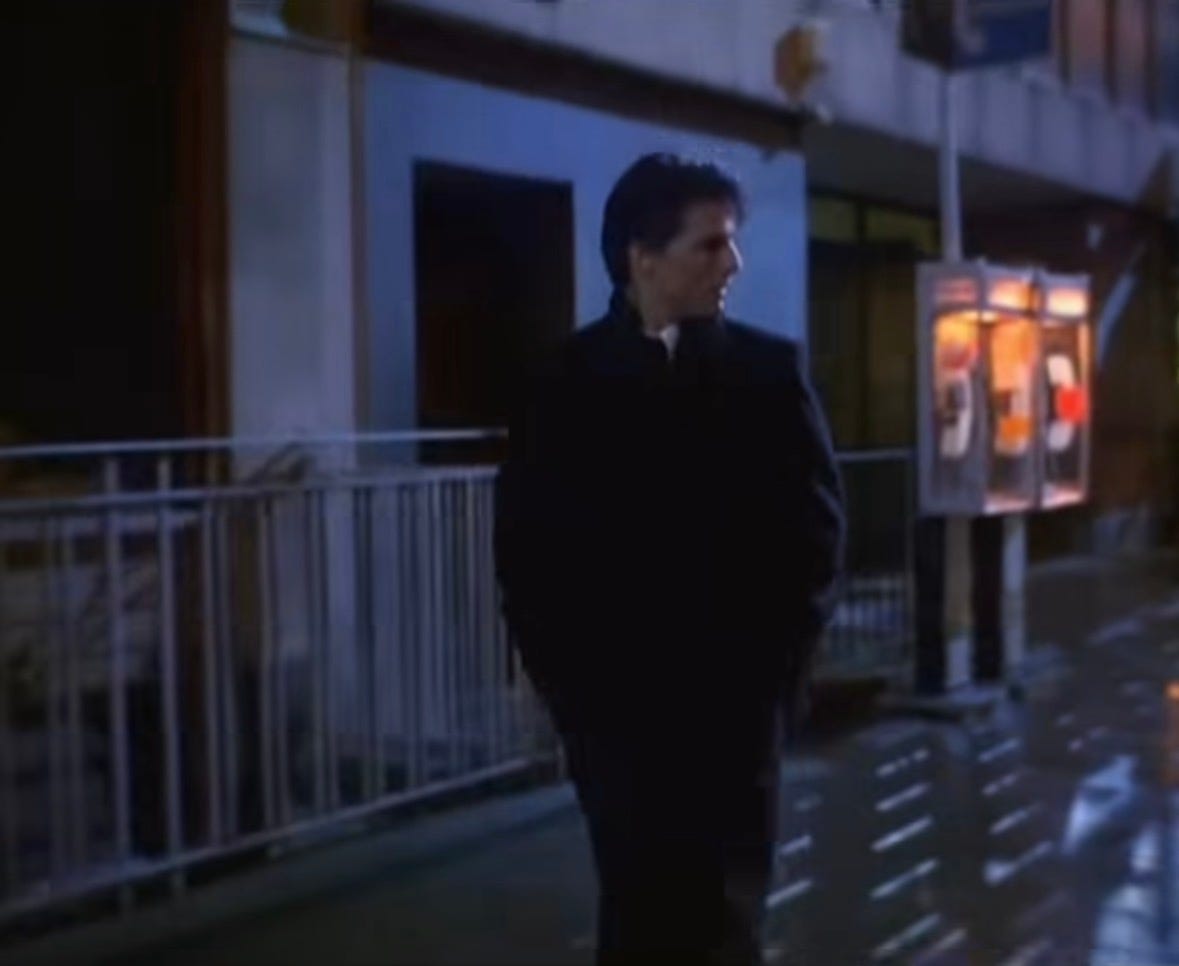
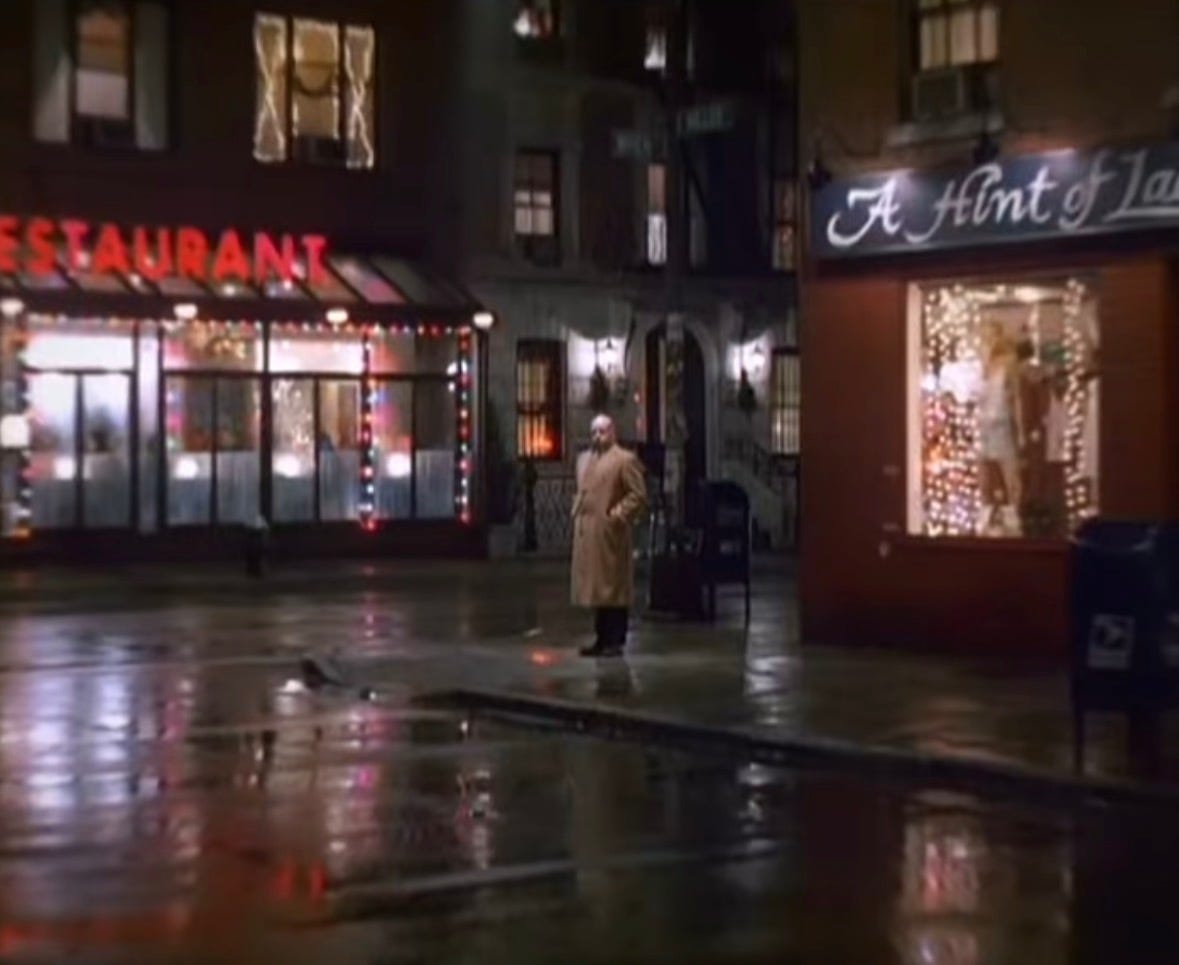
Think of Cruise-movie social-monster organizations such as the compromised IMF (Mission: Impossible), the law firm in The Firm, or the Pre-Crime police organization in Minority Report.
The type of clues that Tom Cruise finds that lead him down a rabbit hole: the two associates at The Firm who have died in alleged “accidents,” or when he learns that the precogs don’t always agree, or that the targeted assassinations coming from an agency all fall under a suspicious pattern.
Even the contradictory transfer order in A Few Good Men is an example of this Buchan conspiracy device in a Tom Cruise movie. (This would put Cruise’s shift to this Buchan genre as early as 1992.)
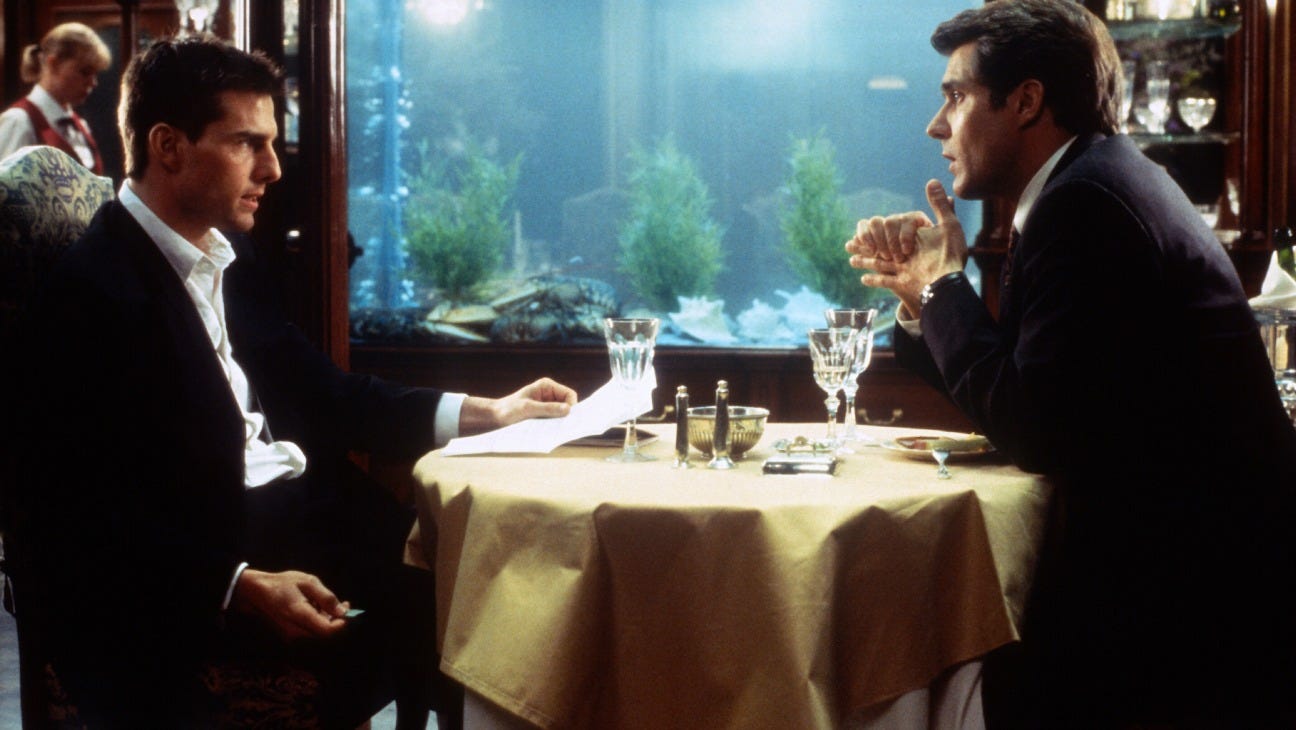
I’d mark the following movies of Cruise’s as following this Buchan-plot to one extent or another (choices in bold):
The Firm (1993)
Interview with the Vampire (1994)
Mission: Impossible (1996)
Jerry Maguire (1996)
Eyes Wide Shut (1999)
Magnolia (1999)
Mission: Impossible 2 (2000)
Vanilla Sky (2001)
Minority Report (2002)
The Last Samurai (2003)
Collateral (2004)
War of the Worlds (2005)
Mission: Impossible III (2006)
Valkyrie (2008)
Knight and Day (2010)
Mission: Impossible – Ghost Protocol (2011)
Jack Reacher (2012)
Oblivion (2013)
Edge of Tomorrow (2014)
Mission: Impossible – Rogue Nation (2015)
Jack Reacher: Never Go Back (2016)
The Mummy (2017)
American Made (2017)
Mission: Impossible – Fallout (2018)
Top Gun: Maverick (2022)
Mission: Impossible – Dead Reckoning Part One (2023)
Mission: Impossible – The Final Reckoning (2025)
A pretty loose reading of Buchan’s Hunted Man genre over Cruise’s post-1993 filmography would be 17/27 films or 62% of his movies.
Jerry Maguire is a nice synthesis between the two Cruise formulas for a blockbuster. At the beginning of the film, Cruise is one of his classic golden boy characters he portrayed in the 1980s, before realizing he’s part of a villainous organization (a talent agency…) that he initially hopes to reform from within.
Valkyrie inverts the dynamic, since it’s now the Cruise character who is the one secretly sabotaging an organization from within—and he is portrayed heroically for doing so.
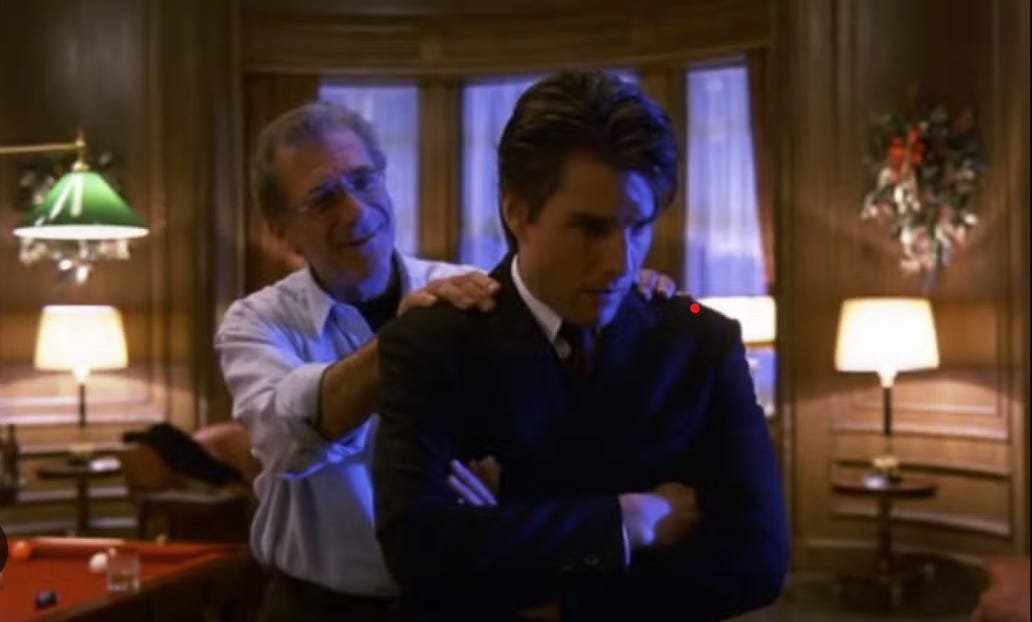
One decent person triumphing over an evil institution, or at least being morally in the right against a majority, is the most basic plot in Hollywood storytelling. It’s not worth telling the story if it’s the other way around. (To be honest, it would actually be pretty hilarious if films such as Erin Brockovich were merely about a lone woman filing frivolous lawsuits—wasting a corporation’s and the movie audience’s time.)
John Buchan, the novelist I’ve mentioned and who Gertrude Himmelfarb once described as “the last Victorian,” was himself a spy and a member of several secret societies (e.g. Milner’s “Kindergarten”).
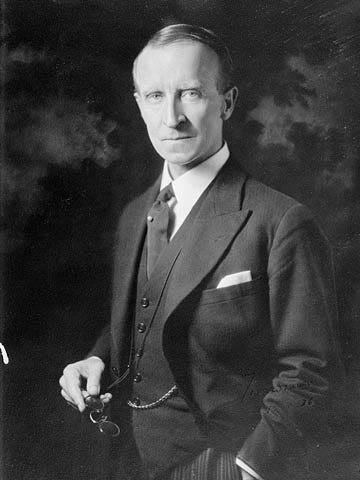
Buchan’s The Thirty-Nine Steps was adapted into a film by Alfred Hitchcock, and Steven Spielberg has supposedly been considering a remake for ages.
Another mainstay from the Buchan spy thriller was the remarkable disguise. That’s something else you'll see in the Mission: Impossible franchise, as well as other Cruise films.
The historian Martin Green:
Buchan shows us people so cleverly disguised as to be unrecognizable even to those who have scrutinized them before. The fascination of disguise had been exploited before-notably by Kipling in Kim and by Conan Doyle in the Holmes stories. The different focus Buchan gives is to insist on the psychological mechanism of the deception—the disguised man cannot be recognized if he is thinking himself to be someone else—to a remarkable and indeed implausible degree. The hero of Thirty-Nine Steps repeatedly stares the villains in the eye and yet cannot be sure they are the men he met before. This device obviously plays with an extreme sense of insecurity in the reader.
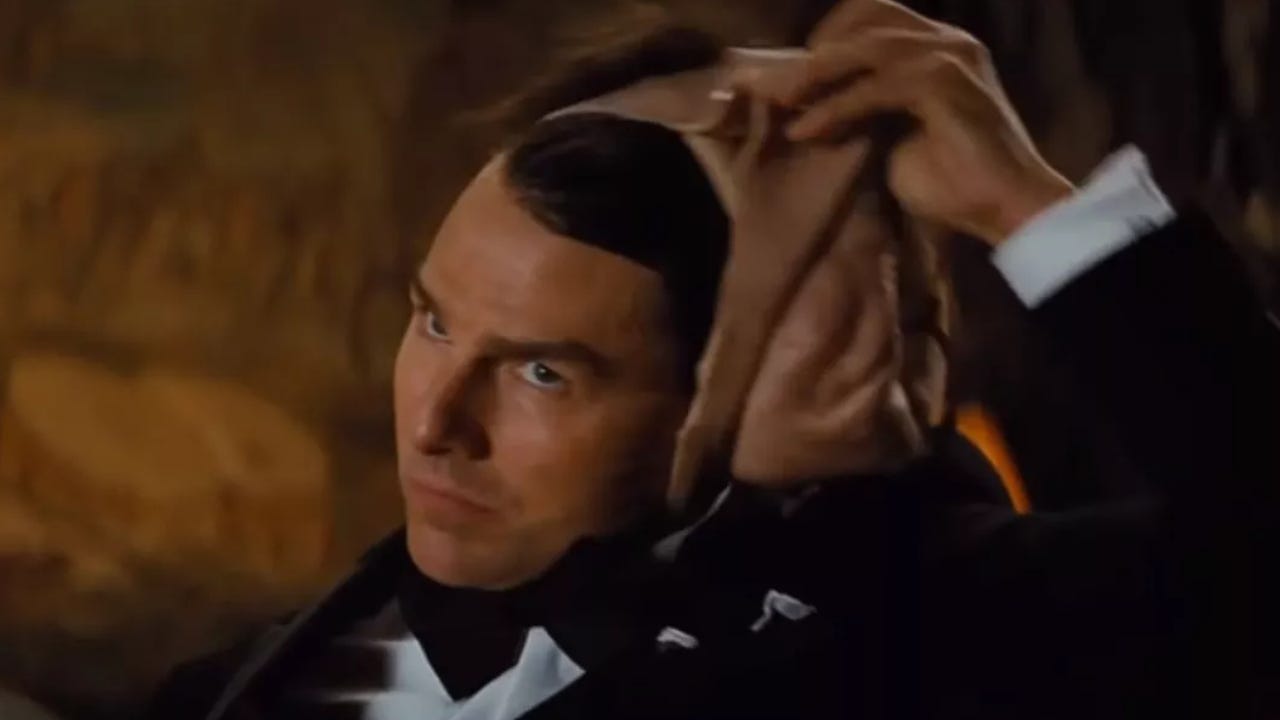
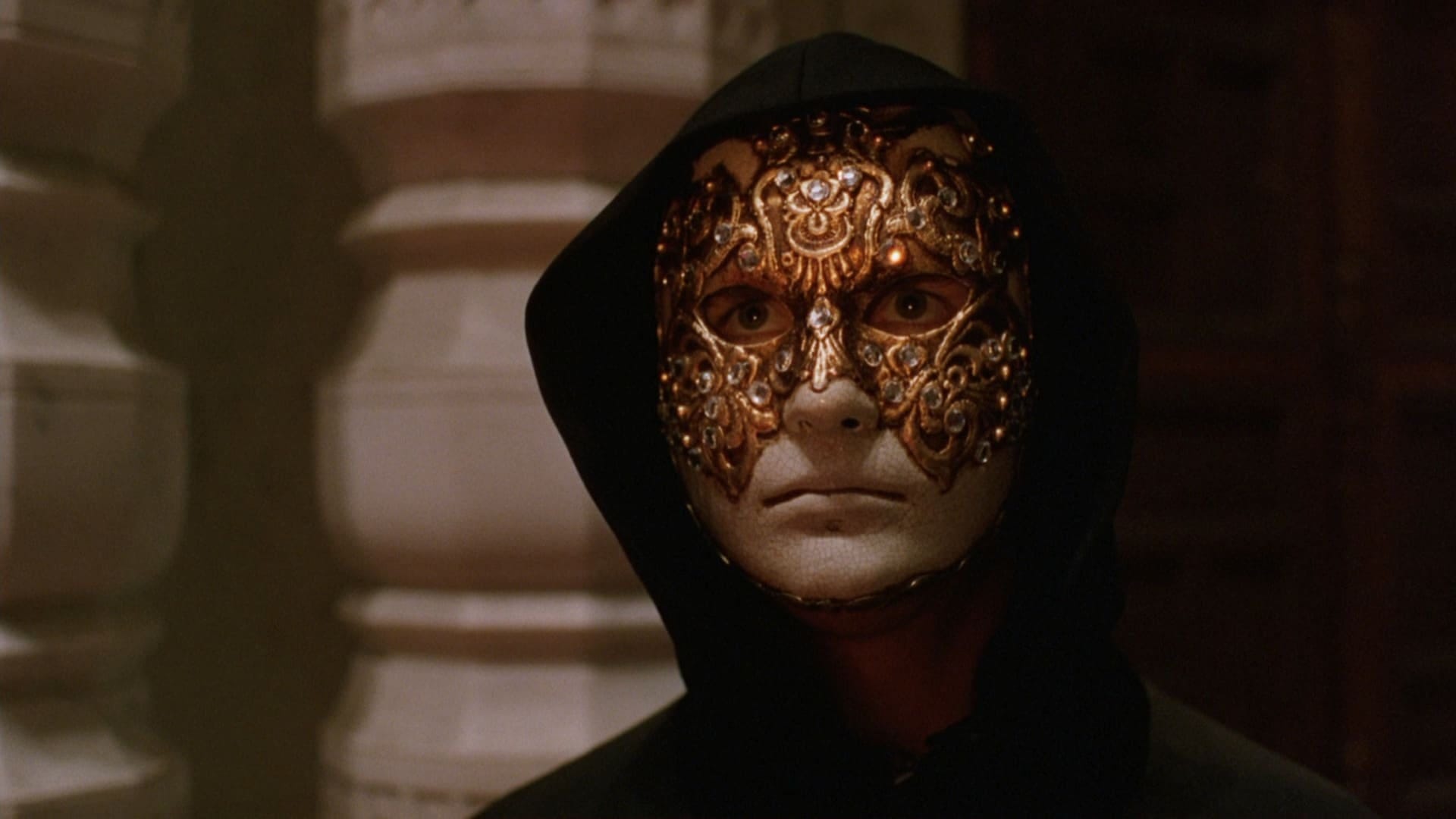
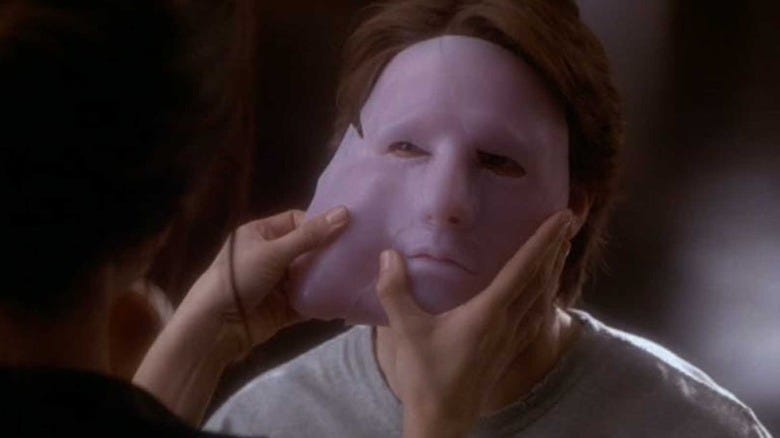
Masks in Cruise movies conceal power structures, the true identities of heroes and villains, and sometimes even the basic nature of Cruise’s reality.
But Tom Cruise knows what he’s doing. A friend who used to work in accounting at one of the Hollywood studios told me that, as of 2016, Cruise’s box-office streak was unprecedented. He’d never come up short, ever, on the 2.5x Rule, which is
If a movie costs, say, $100 million to produce, it often needs to gross $250 million worldwide to break even, as theatres take roughly half the revenue, and marketing costs can equal or exceed production budgets.
Cruise’s films (at least when he’s the star and not part of an ensemble e.g. Rock of Ages or Lions for Lambs) have always made their money back at the 2.5x rule.
The equivalent in sports was Tom Brady never having a losing regular-season record until his final year with the Bucs, when he finished 8-9.
Cruise’s other facet in his films is performing dangerous stunts. In doing most of his own stunts, he is probably in agreement with John Buchan again, who said he was of “Walter Bagehot’s opinion that the greatest pleasure in life is doing what people say you cannot do.”
It’s funny that Cruise is bent on remaking this type of Hunted Man story, as becoming a “hunted man” is supposedly what happens to you should you try to leave Scientology or turn your back on Hollywood.
One might theorize, if you’re conspiratorially-minded, that making these movies is Cruise’s way of imagining his own escape from powerful but corrupt organizations and social networks. That these are his $200M wish-fulfillment fantasies. Or…OR…it could just be that this is the movie formula that has made Tom Cruise the most famous movie star in the world.
And since his Hollywood star formula is not broken, he will not fix it.
If you haven’t already, please take advantage of my sale on annual Flynn Effect subscriptions, which are only available for a few more days.
“
How to Fake Like You Are a Nice and Caring Person.
Such a good thread - I knew a lot of this - but, super interesting take- my dad was a son of Belial and a detective in Los Angeles and he was a celebrity fixer. This is all so right on.